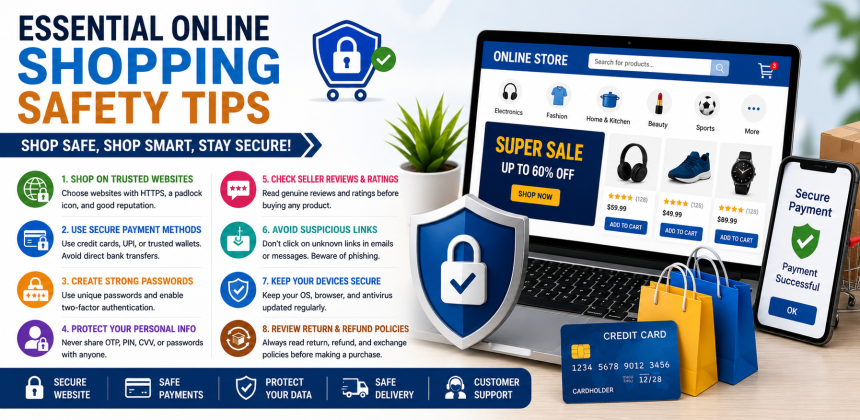
Online shopping has become one of the most convenient ways to purchase products, offering access to thousands of items from the comfort of your home. Whether you're buying electronics, clothing, groceries, furniture, or beauty products, e-commerce platforms make shopping faster and easier than ever before. However, as online shopping continues to grow, so do cyber threats such as fake websites, phishing scams, identity theft, and payment fraud. By following a few essential safety practices, you can protect your personal information, financial details, and shopping experience while enjoying all the benefits of online purchasing.
The first and most important step is to shop only from trusted and reputable websites. Always choose well-known e-commerce platforms or verified online stores with a strong reputation. Before making a purchase, check the website's URL to ensure it begins with https:// instead of http://. The padlock icon displayed next to the website address indicates that the website uses SSL encryption, helping protect your personal and payment information during transactions.
Before purchasing from an unfamiliar online store, spend a few minutes researching the seller. Read customer reviews, ratings, and testimonials to understand the experiences of previous buyers. Trusted marketplaces usually display seller ratings and verification badges that help customers identify reliable businesses. Sellers with consistently positive reviews are more likely to provide genuine products, timely delivery, and quality customer service.
Creating strong passwords is another essential security measure. Use a unique password for every shopping account that combines uppercase and lowercase letters, numbers, and special characters. Avoid using easily guessed information such as birthdays or phone numbers. Enabling two-factor authentication (2FA) whenever available adds an extra layer of protection by requiring an additional verification step during login.
Always use secure payment methods when shopping online. Reliable e-commerce websites offer payment options such as credit cards, debit cards, UPI, net banking, digital wallets, and trusted payment gateways. These payment methods include fraud protection features that help secure your financial transactions. Avoid transferring money directly to unknown bank accounts or making payments through suspicious links shared via email or social media.
Be cautious of deals that seem too good to be true. Extremely low prices, unrealistic discounts, or limited-time offers designed to create urgency may be signs of fraudulent websites or counterfeit products. Compare prices across multiple sellers before making a purchase. Trusted marketplaces maintain competitive pricing while ensuring product authenticity and customer protection.
Reading product descriptions carefully is another important habit. Product pages contain valuable information such as specifications, dimensions, warranty details, included accessories, compatibility, and return policies. Carefully reviewing these details helps avoid misunderstandings and ensures the product meets your expectations before placing an order.
Never shop using public Wi-Fi networks unless you are connected through a trusted Virtual Private Network (VPN). Public networks found in cafes, airports, hotels, or shopping malls can expose your personal information to cybercriminals. Whenever possible, complete online purchases using your home internet connection or a secure mobile network.
Phishing attacks are one of the most common online shopping scams. Fraudsters often send fake emails, SMS messages, or social media advertisements pretending to represent popular online stores. These messages may contain links asking you to update payment details or claim exclusive discounts. Always verify the sender before clicking any links and avoid entering personal information on unfamiliar websites.
Review the website's return, refund, and replacement policy before completing your purchase. Trusted online marketplaces provide transparent policies that explain how customers can return damaged, defective, or incorrect products. Understanding these policies gives you confidence and protects your rights as a customer.
Keeping your devices updated is another simple but effective security practice. Install the latest operating system updates, antivirus software, and browser security patches to protect your computer, smartphone, or tablet from malware and security vulnerabilities. Updated software helps defend against cyber threats while improving your overall browsing experience.
Monitoring your bank statements and transaction history after making online purchases is equally important. Check your payment records regularly for any unauthorized charges or suspicious transactions. If you notice anything unusual, contact your bank or payment provider immediately to secure your account.
Avoid saving your payment details on unfamiliar websites. While trusted marketplaces may securely store payment information for convenience, it is generally safer to enter payment details manually when using new or less familiar platforms. This reduces the risk of your financial information being compromised if a website experiences a security breach.
Trusted online marketplaces invest heavily in customer security by using encrypted payment systems, fraud detection technology, verified sellers, and secure checkout processes. These measures significantly reduce the risk of fraud while providing customers with a safe and reliable shopping environment.
In conclusion, online shopping is safe and convenient when proper precautions are followed. Shopping from trusted websites, verifying sellers, using secure payment methods, creating strong passwords, avoiding phishing scams, reading customer reviews, understanding return policies, and keeping your devices secure all contribute to a safer shopping experience. By adopting these essential safety habits, you can confidently enjoy the convenience, variety, and savings offered by modern e-commerce platforms while protecting your personal information and financial security. Smart online shopping begins with informed decisions, and a few simple precautions can make every purchase safe, secure, and worry-free.